
You can reach local buyers without giving up control of your sale. To advertise your FSBO listing, create a compelling online listing, share it through local channels, use signage and open houses, and consider MLS exposure. In a for-sale-by-owner sale, you manage pricing, marketing, showings, negotiations, and paperwork yourself.
That independence also means buyers need clear, appealing information and an easy way to arrange a showing. Strong photos and a specific property description can help your home stand out, while online promotion and in-person visibility give local buyers more ways to find it. This guide covers writing an effective listing, choosing advertising channels, hosting showings, and using flat-fee MLS exposure to broaden your reach. You’ll get practical steps for promoting your home while staying in control of the process.
Key Takeaways
- Make showings welcoming, stay flexible with scheduling, and follow up with visitors within 24 hours.
- Use clear, high-quality photos and a property description that connects standout features to buyers’ needs.
- Combine local visibility, social media, and online listing channels to help nearby buyers discover your home.
- Consider flat-fee MLS exposure as another way to put your listing in front of buyers and agents.
1. Open houses and private showings
Use open houses and visible signage to let nearby buyers know your home is for sale. Place a clear yard sign where passing traffic can read it, then add the open-house time and showing instructions. Before visitors arrive, tidy the entry, clear walkways, and put away personal items. Set the heating or air conditioning for the season so buyers can focus on the rooms, not the temperature.
Make the tour easy to follow. Open curtains and interior doors, switch on lights, and give visitors room to move through the home. Offer complimentary drinks in disposable cups with lids, including a decaffeinated option. Keep refreshments in one spot, away from listing materials and walkways. A simple floor-by-floor route helps visitors notice the kitchen, living areas, bedrooms, and storage without missing key features.
For private showings, accommodate buyers’ preferred days and times when possible. Reply promptly with available appointment windows, directions, and entry instructions. Keep listing details nearby, including room dimensions and recent updates, so you can answer questions consistently. If you don’t know an answer, say you’ll follow up rather than guessing.
During the tour, be welcoming and let buyers explore. Point out features that may meet everyday needs, such as a main-floor bedroom, a quiet workspace, or a fenced yard. Avoid arguing about a buyer’s opinion or pushing for an immediate reaction. Ask whether they’d like more information, then give them space to discuss the home privately. Accurate answers build trust; unsupported claims can create confusion later.
After each open house or showing, send attendees a thank-you message within 24 hours. Mention a detail they asked about, share the relevant information, and invite them to arrange another visit if they want a closer look. Keep a brief record of questions and follow-ups, such as a request about parking or appliance details. That simple routine helps you respond reliably as you work to sell your home.
2. Writing an engaging online listing
Start with a title that identifies the home’s strongest feature and location. “Renovated kitchen near downtown” gives buyers more useful context than “Beautiful home.” Keep the claim accurate, then lead with features that meet everyday needs. A finished basement might offer flexible workspace; an open layout can make shared living easier. If you're deciding how to advertise your FSBO listing online, make each detail specific and useful.
Include clear property facts, such as the asking price, location, bedroom and bathroom count, and verified living area. Describe notable updates, outdoor space, parking, and included appliances when relevant. Be transparent about known property issues, and provide formal seller disclosures as required where the home is located. Don’t imply the property has a feature or condition it doesn’t have.
Build the description around specifics, not a string of adjectives. For example, explain how a recently renovated kitchen connects to the dining area, or how a fenced yard opens from the living room. Mention nearby amenities only when you can describe them accurately. Break longer copy into short paragraphs so online readers can scan it on a phone.
Strong visuals help buyers understand the home before they book a tour. Use bright, high-quality photos taken by an experienced real estate photographer. Show each main room, useful storage, outdoor areas, and distinctive details. Add a floor plan or 3D tour when available. A short video can connect the rooms into a clear walkthrough, while virtual staging may help buyers picture furniture in an empty property.
Review the complete listing before publishing. Check that the photos match the written details, the contact method works, and showing instructions are clear. Remove outdated descriptions when a feature changes, then update the copy and visuals together. For sellers weighing how to advertise an FSBO listing, consistent details across platforms make the property easier to evaluate. If broader distribution fits your plan, explore flat-fee MLS listing options for another way to present the property to buyers.
3. FSBO advertising channels
Advertising rules depend on your state and city. Keep every claim accurate, and use current property details across your ads. Before posting, review local requirements for property disclosures and sign placement so your yard sign, flyers, and online copy follow applicable rules.
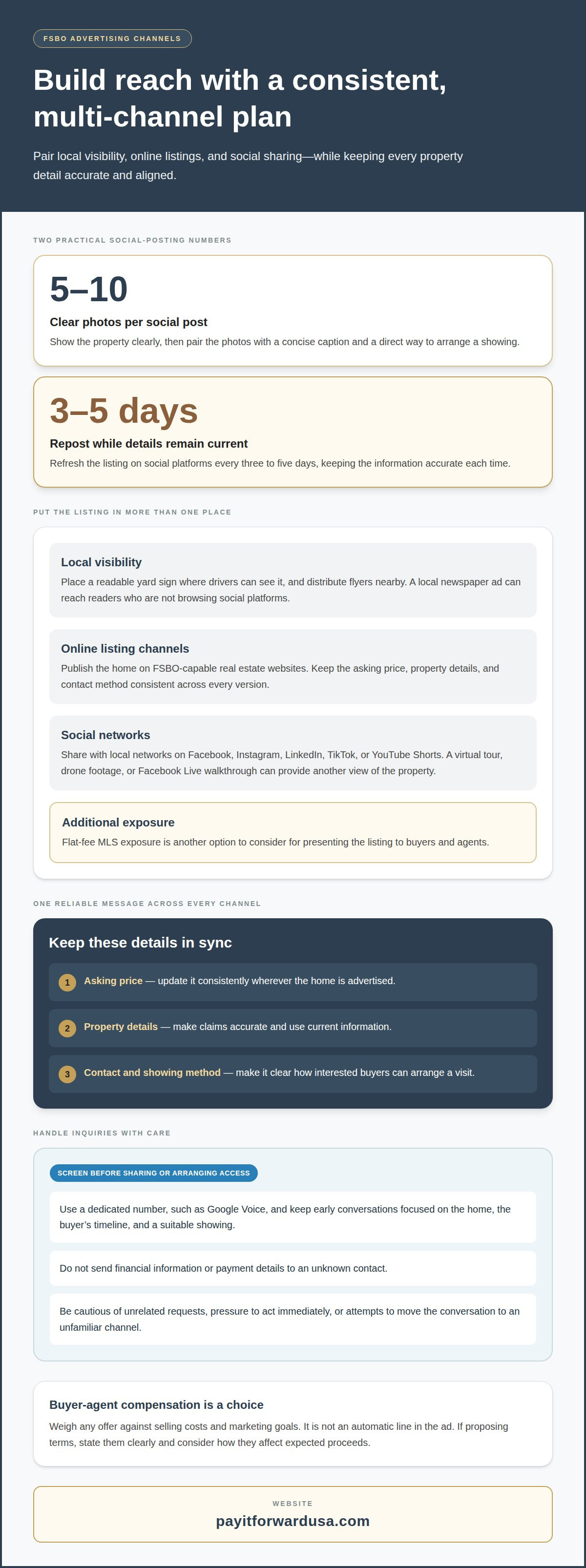
Combine channels instead of relying on a single post. Place a yard sign where drivers can see it, distribute flyers nearby, and publish the home on FSBO-capable real estate websites. A local newspaper ad can reach readers who aren’t browsing social platforms. Keep the asking price, property details, and contact method consistent in every version.
Use Facebook, Instagram, LinkedIn, TikTok, or YouTube Shorts to share the listing with local networks. Include 5-10 clear photos in a social post, then add a concise caption and a direct way to arrange a showing. Repost every three to five days while the details remain current. A virtual tour, drone footage, or Facebook Live walkthrough can offer another view of the property.
Screen inquiries before sharing personal details or arranging access. Use a dedicated number, such as Google Voice, and keep early conversations focused on the home, the buyer’s timeline, and a suitable showing. Don’t send financial information or payment details to an unknown contact. Be cautious about requests unrelated to a property purchase, pressure to act immediately, or attempts to move the conversation to an unfamiliar channel.
Offering compensation to a buyer’s agent is a choice to weigh against your selling costs and marketing goals. Don’t treat it as an automatic line in the ad. If you decide to propose terms, state them clearly and consider how they affect your expected proceeds. Agents and buyers need to understand the offer before evaluating the home.
Track which channels bring useful inquiries. Note, for example, whether a buyer found the property through a neighborhood flyer, Instagram post, or yard sign. If a channel brings no relevant interest, refresh its copy or shift effort elsewhere. Keep listing details aligned across all channels, especially after a price or showing update.
Before advertising, check local requirements for property disclosures and sign placement. Keep claims accurate, and make sure property details stay current and consistent across every ad.
4. Flat-fee MLS exposure
A flat-fee MLS service can place a for-sale-by-owner property on a multiple listing service. This gives real estate agents another way to find it while searching for homes with buyers. It adds a professional listing channel to your yard sign, social posts, and FSBO website advertising. You still manage inquiries, showings, and offer decisions.
Prepare accurate listing information before submission. Gather the property address, asking price, room details, features, and clear photos. Describe a finished basement accurately, for example, rather than calling it a separate apartment. Complete each required listing field and review the final entry for errors. Incorrect details can confuse buyers and agents, so consistency matters.
MLS exposure doesn’t replace the work of marketing your home. Keep your online description current, respond to inquiries, and arrange showings. If the price or a property detail changes, update the MLS entry and your other advertisements. Consistent details help buyers compare the same facts wherever they find the property.
Before choosing a flat-fee listing option, understand what the service covers and what remains your responsibility. Review how listing updates are handled, how inquiries reach you, and which seller tasks continue after publication. The right setup depends on the visibility and support you want while retaining control over buyer communication and negotiations.
Think of MLS placement as one part of a broader plan, not a substitute for strong photos, accurate remarks, and prompt follow-up. A buyer might first see the home through an agent, then review its details online before requesting a tour. Make each channel point to the same property facts and showing process. To put your Utah home on the MLS, explore flat-fee MLS listing options.
Pay It Forward Realty LLC offers Utah homeowners the Monthly Listing Plan for flat-fee MLS exposure while they manage their FSBO sale. It can be a practical next step when you’ve prepared your listing and want it placed on the MLS, alongside your own photos, advertising, and buyer follow-up. You stay involved in marketing decisions and communication with prospective buyers.
Consider this route if you want MLS visibility without handing over the full selling process. The right fit depends on how you plan to manage inquiries, showings, and negotiations after the listing is live. Pay It Forward Realty LLC also offers the Affordable Package and Affordable Plus Package for homeowners considering other listing options.
Contact Pay It Forward Realty LLC to discuss the listing option that fits your selling plans.
Make your next move with confidence
If you’re deciding how to advertise your FSBO listing, set a clear goal for the next stage of your sale. Focus on the result you need most: more qualified inquiries, stronger buyer interest, or a smoother path from offer to closing. That goal can guide your next adjustment without requiring you to change the whole plan at once.
Pay attention to the quality of buyer responses, not just the number of messages. Specific questions about the property or requests to discuss next steps can show where interest is developing. If activity stalls, revisit whether your asking price, listing details, and overall presentation give buyers a clear reason to act.
You’re in control of the decisions, and you can make them one at a time. For support with your Utah listing approach, explore your FSBO listing options with Pay It Forward Realty LLC. Keep moving forward with a plan that fits your priorities.
Frequently Asked Questions
How does For Sale By Owner work?
For Sale By Owner means you sell without a listing agent and manage the transaction yourself. You decide how to handle pricing, buyer communication, and offer negotiations, then coordinate the steps toward closing. After accepting an offer, for example, you’ll need to track deadlines, requested documents, and agreed terms. Careful organization helps prevent important details from slipping through.
What are the best ways to advertise a FSBO home for sale?
Use a mix of methods to reach buyers online and near the property. Choose channels you can keep current, then track where inquiries come from. Ask each interested buyer how they found the home and note the answer. If a channel brings relevant inquiries, prioritize it; if responses are limited, adjust the presentation or broaden your reach.
Which websites let homeowners advertise FSBO listings, and what do they cost?
FSBO-capable real estate sites and flat-fee MLS services are options for homeowners. Website charges vary by the listing plan, distribution, and optional features, so there isn’t one universal cost. Review what each plan includes, how long the listing remains active, and whether updates or added exposure affect the total. For current fees, use the pricing details shown for the specific option.
How do I write an effective FSBO listing description and choose photos?
Lead with the home’s most useful differentiator, then support it with accurate details. For example, explain how a main-floor bedroom suits someone seeking fewer stairs. Choose photos that clearly show the home’s layout, with each image adding new information. Avoid repeating nearly identical angles or using images that make rooms look different from their actual condition.
How can I promote a FSBO listing on social media and local channels?
Adapt the core property facts for each audience instead of posting identical copy everywhere. A neighborhood group may respond to details about nearby amenities, while a broader social post can focus on the home’s standout feature. Keep a record of where you share the listing and remove outdated posts when details change. This helps prevent buyers from finding conflicting information.
What are the rules for advertising a home for sale in my state or city?
Before advertising, check local requirements for property disclosures and sign placement. Keep every claim accurate, and make sure property details stay current and consistent across your ads.


