
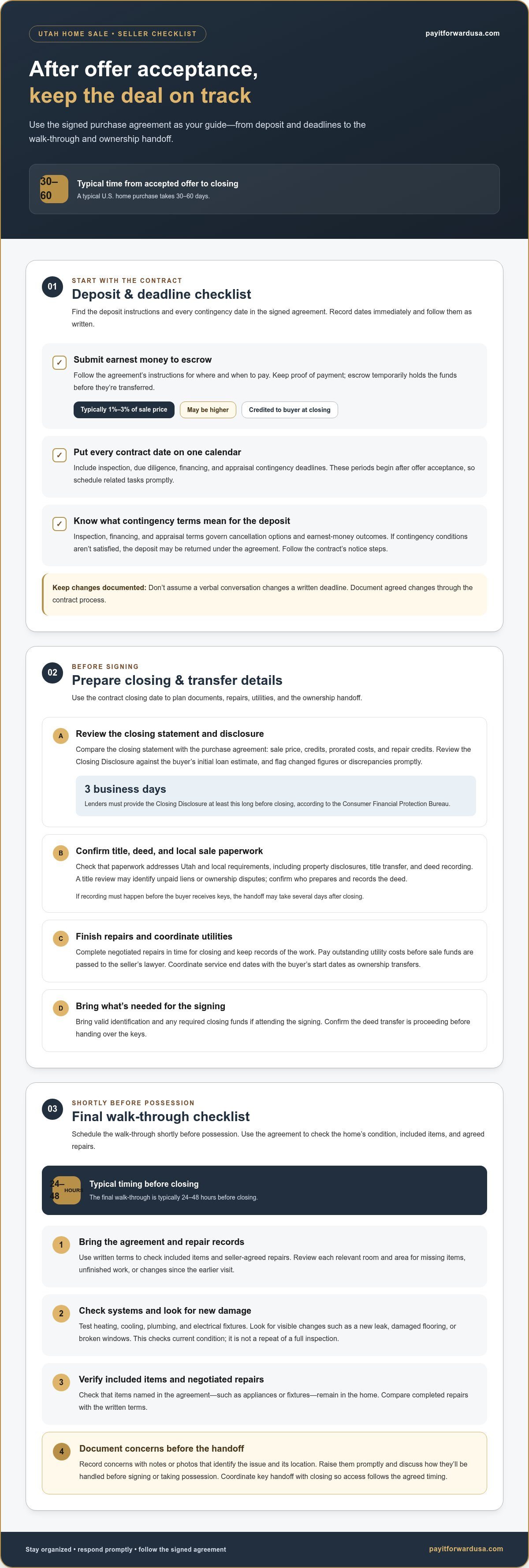
Accepting an offer starts a deadline-driven process, not a pause before closing. To know what to do after accepting an offer on your house in Utah, follow the purchase agreement: track earnest money and contingency deadlines, prepare for the appraisal and final walk-through, then complete the closing and ownership transfer. A U.S. home purchase typically takes 30-60 days from accepted offer to closing.
It’s normal for the focus to shift from finding a buyer to keeping the deal on track. Stay organized, respond promptly, and tie each step to the deadlines in your contract.
This guide covers the next steps, from earnest money and contract deadlines to the appraisal, final walk-through, and closing documents. You’ll know what to watch for as you move toward handing over the home.
Key Takeaways
- Use the signed purchase agreement to track earnest money instructions and every contingency deadline.
- Review closing documents and loan figures carefully, then prepare the identification and funds needed to complete the transfer.
- Use the final walk-through to confirm the home’s condition, included items, and agreed repairs before taking possession.
- If the appraisal is below the purchase price, understand how it affects financing and weigh your available options before moving ahead.
Closing documents and transfer of ownership
Knowing what to do after accepting an offer on your house starts with the closing date in your contract. Use it to plan documents, repairs, utility changes, and the ownership handoff.
-
Review closing statements and disclosure
Compare the closing statement with your purchase agreement. Check the sale price, credits, prorated costs, and any repair credits. Review the Closing Disclosure against the buyer’s initial loan estimate for changed figures. The Consumer Financial Protection Bureau says lenders must provide it at least three business days before closing. Flag discrepancies promptly so they can be addressed before signing.
-
Check state and local sale rules
Confirm that the sale paperwork addresses Utah and local requirements, including property disclosures, title transfer, and deed recording. These steps can affect the documents required and how ownership is recorded. Can a seller accept a backup offer after accepting an offer? A seller may accept one, but it remains secondary while the first contract is active. What state and local laws affect a home sale after offer acceptance? Disclosure, transfer, and recording requirements may apply depending on the property’s location.
- Coordinate the title review and deed. A title review checks whether you can legally transfer the property and may identify unpaid liens or ownership disputes. Resolve title issues through closing, and confirm who prepares and records the deed. If recording must happen before the buyer receives keys, the handoff may take several days after closing.
- Schedule repairs and confirm the closing date. Finish negotiated repairs in time for closing, and keep records of completed work. Your checklist for what to do after accepting an offer on your house should include the contract’s closing date, when the buyer officially takes over. A U.S. purchase typically takes 30-60 days from accepted offer to closing.
- Settle utilities and prepare the handoff. Pay outstanding utility costs before sale funds are passed to the seller’s lawyer. Coordinate service end dates with the buyer’s start dates, and cancel your accounts as ownership transfers. Bring valid identification and any required closing funds if you attend the signing. Confirm that the deed transfer is proceeding before handing over the keys.
Earnest money deposit and contract deadlines
Find the deposit instructions and deadlines in your signed purchase agreement first. Then track each contingency date to help protect the earnest money from a missed step.
-
Deposit earnest money into escrow
Follow the purchase agreement’s instructions for where and when to submit earnest money. The agreement sets the deposit deadline, so note it immediately and keep proof of payment. An escrow account temporarily holds the funds before they’re transferred between the parties. In U.S. home purchases, earnest money is typically 1%-3% of the sale price, though the amount can be higher. At closing, the deposit is credited to the buyer.
-
Track contract deadlines
Put every contract date on one calendar, including inspection, due diligence, financing, and appraisal contingency deadlines. These periods start after offer acceptance, so schedule related tasks promptly and leave time to send notices or documents. Follow each deadline as written in the agreement. Don’t assume a verbal conversation changes a written date; document agreed changes through the contract process.
-
Review contingencies and earnest money outcomes
Read the contingency language to understand when the buyer may cancel and what steps protect the deposit. Inspection, financing, and appraisal contingencies can provide options if their terms aren’t met. If contingency conditions aren’t satisfied, earnest money may be returned under the agreement. An inspection contingency may allow the buyer to recover the deposit if significant problems lead them to withdraw. Without one, the seller may not be required to return it. What contingencies let a buyer cancel a home purchase, and what happens to earnest money? The contract’s inspection, financing, and appraisal terms govern cancellation options and the deposit outcome.
Final walk-through
Schedule the final walk-through shortly before possession, typically 24-48 hours before closing. Use it to compare the home’s condition with your agreement and spot changes before the handoff.
- Bring the agreement and repair records. Use the purchase agreement to identify included items and repairs the seller agreed to complete. Bring any written repair updates so you can compare the work with the agreed terms. Check each relevant room and area, rather than relying on memory. A clear list helps you notice missing items, unfinished repairs, or changes since your earlier visit.
- Check major systems and look for new damage. Test the home’s major systems, including heating, cooling, plumbing, and electrical fixtures. Look for visible changes such as a new leak, damaged flooring, or broken windows. The final walk-through is to assess the property’s current condition, not repeat a full inspection. Note each concern clearly and identify its location.
- Confirm included items and negotiated repairs. Check that items named in the agreement, such as appliances or fixtures, remain in the home. Compare completed repairs with the written terms. If a repair appears unfinished or an included item is missing, record the details and raise the issue promptly with the appropriate transaction contact. Document the concern rather than relying on an informal conversation.
- Address concerns before accepting the handoff. Promptly share any observed problem, with photos or notes identifying the issue and its location. Discuss how the parties will handle it before signing or taking possession. The buyer receives the keys after the final walk-through and confirmation that the home is in the expected condition. Coordinate the key handoff with closing so access and possession follow the agreed timing.
Home appraisals and appraisal contingencies
The buyer’s lender orders an appraisal to estimate the home’s value using comparable local sales. Review the contract’s appraisal terms so you understand the options if the valuation is below the offer.
-
Prepare for the mortgage appraisal
Arrange access for the appraiser and keep the property available at the agreed time. The appraiser independently estimates the home’s value, considering comparable homes and sales in the area. What are the seller’s responsibilities during the home inspection and appraisal? Provide the access arranged for each visit, and let inspectors and appraisers assess the property independently. Share relevant property information through the agreed transaction process, without pressuring them to reach a particular conclusion.
-
Review appraisal contingency options
Read the appraisal contingency in the signed agreement and note its deadline and terms. It explains the buyer’s options if the appraisal is below the agreed price. Depending on the contract, the buyer may be able to renegotiate, proceed under revised financing, or withdraw. Keep communications in writing, and don’t assume the appraisal automatically changes the sale price or cancels the agreement.
-
Address a low appraisal
Discuss the valuation and contract options promptly if the appraisal comes in low. The buyer and seller may renegotiate the price, consider concessions, or adjust financing. For example, a $500,000 offer with a $470,000 appraisal leaves a $30,000 gap the buyer may need to cover. A buyer may choose to pay a gap, but the parties can also negotiate different terms. Review the contingency before deciding, since the agreement governs available next steps.
Pay It Forward Realty LLC offers Utah homeowners flat-fee MLS listing options for a future sale. If you plan to sell another property after closing, consider its Affordable Package, Affordable Plus Package, or Monthly Listing Plan. Homebuyers purchasing through the brokerage can also explore the Buyer Rebate.
Choose the option that fits your next transaction: a listing package for a home you plan to sell, or the Buyer Rebate if you’re purchasing a home. Contact Pay It Forward Realty LLC to discuss your next step, or visit the company’s website.
Plan Your Next Move With Confidence
A sale can be a turning point and a chance to consider what you want from your next housing move. Knowing what to do after accepting an offer on your house helps you navigate the transition, while your plans after closing deserve equal care. Consider whether you’ll buy again, sell another property, or take time before deciding.
If buying or selling again is on your horizon, Pay It Forward Realty LLC can help you explore its Utah real estate options. Choose a next step that fits your plans and get the details you need to move forward on your terms.
Contact Pay It Forward Realty LLC to talk through your next real estate move. You’ve handled a major decision. Now take the next one at your pace, with a plan that feels right for you.
Frequently Asked Questions
What happens after a seller accepts a home offer?
The signed purchase agreement sets the next actions for both parties. The buyer submits earnest money according to its terms, while inspection, financing, and appraisal deadlines begin. As the seller, organize the contract, respond to requests, and make the home available for agreed access. For example, record scheduled visits and repair commitments so you can track what remains before closing.
What is the typical home sale closing timeline in the U.S.?
A U.S. home purchase typically takes 30-60 days from accepted offer to closing. Your agreement’s closing date is the practical planning anchor, since financing, title work, and contract conditions must progress before then. If a lender needs additional documents or a title issue requires attention, coordinate promptly with the transaction parties to address the delay and understand how it affects the scheduled date.
What happens if the buyer’s financing falls through?
If the buyer cannot obtain financing, the purchase agreement and its financing contingency determine what happens next. The buyer may have a contractual option to withdraw if the contingency conditions aren’t met; the earnest money outcome depends on the agreement and required notices. For example, check whether the buyer gave notice by the deadline before treating the contract as ended or planning another sale.
What documents must a home seller provide after accepting an offer?
Provide the documents required by the signed agreement and closing process. These may include the purchase contract, property disclosures, and information needed for title review and deed preparation. Gather relevant records early, such as receipts for repairs promised in the contract. The title review can identify ownership issues, including unpaid liens, that may need to be resolved before the transfer proceeds.
When should a seller schedule movers, utilities, and the final walkthrough?
Use the contract’s closing and possession dates to coordinate your move. Arrange movers around the agreed handoff, and contact utility providers ahead of your move-out date to settle accounts and end service appropriately. The buyer’s final walk-through typically occurs 24-48 hours before closing, so keep the home accessible and avoid removing items included in the sale before that visit.
What are typical seller closing costs and when are they paid?
Seller costs depend on the transaction and appear on the closing statement, which itemizes credits, charges, and the seller’s proceeds. Pay outstanding utility costs before sale funds are passed to the seller’s lawyer. Review the itemized statement before signing.


